Developer: Capcom
Platforms: XBSX, PC, PS5
Version Played: PC
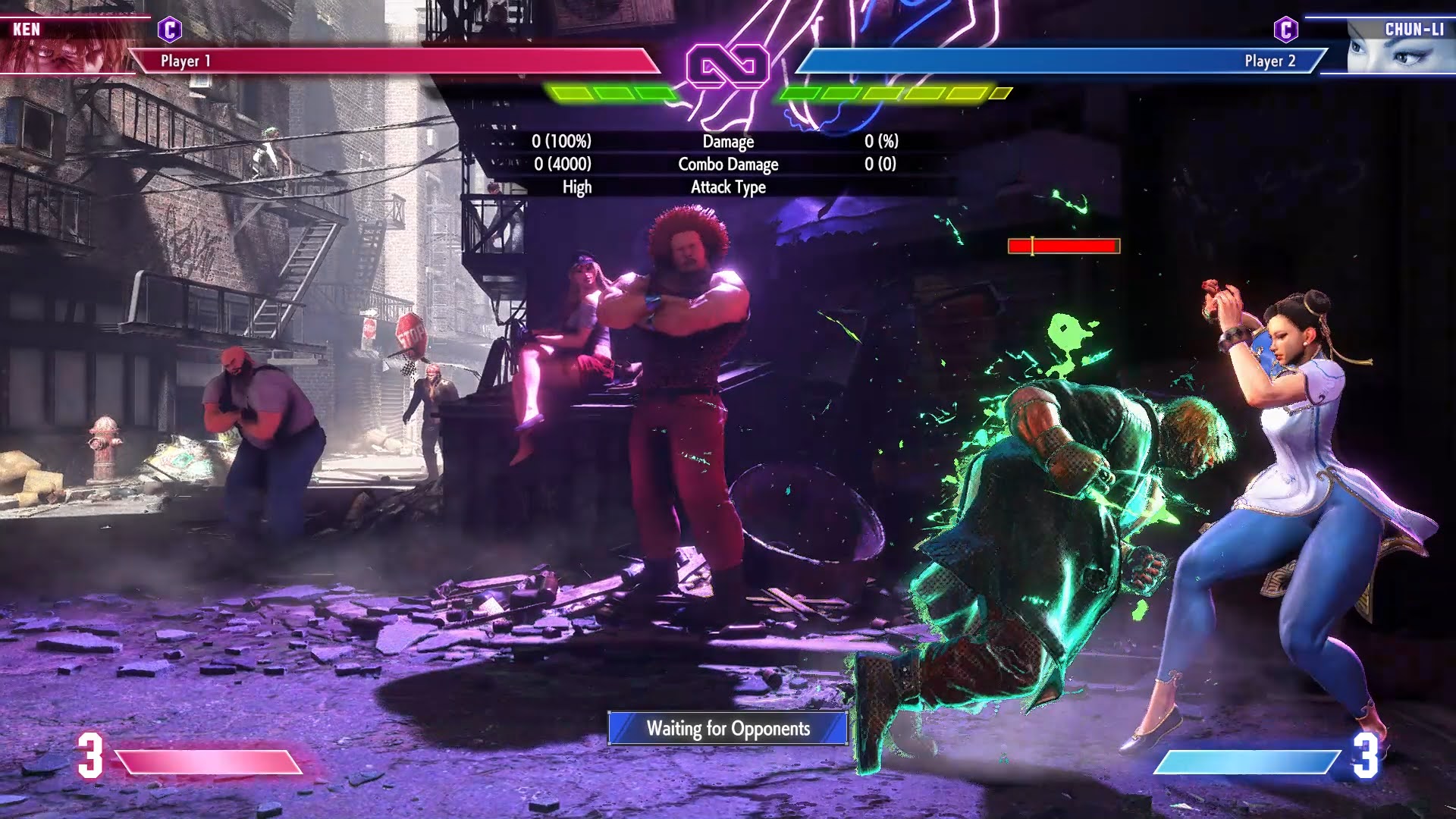
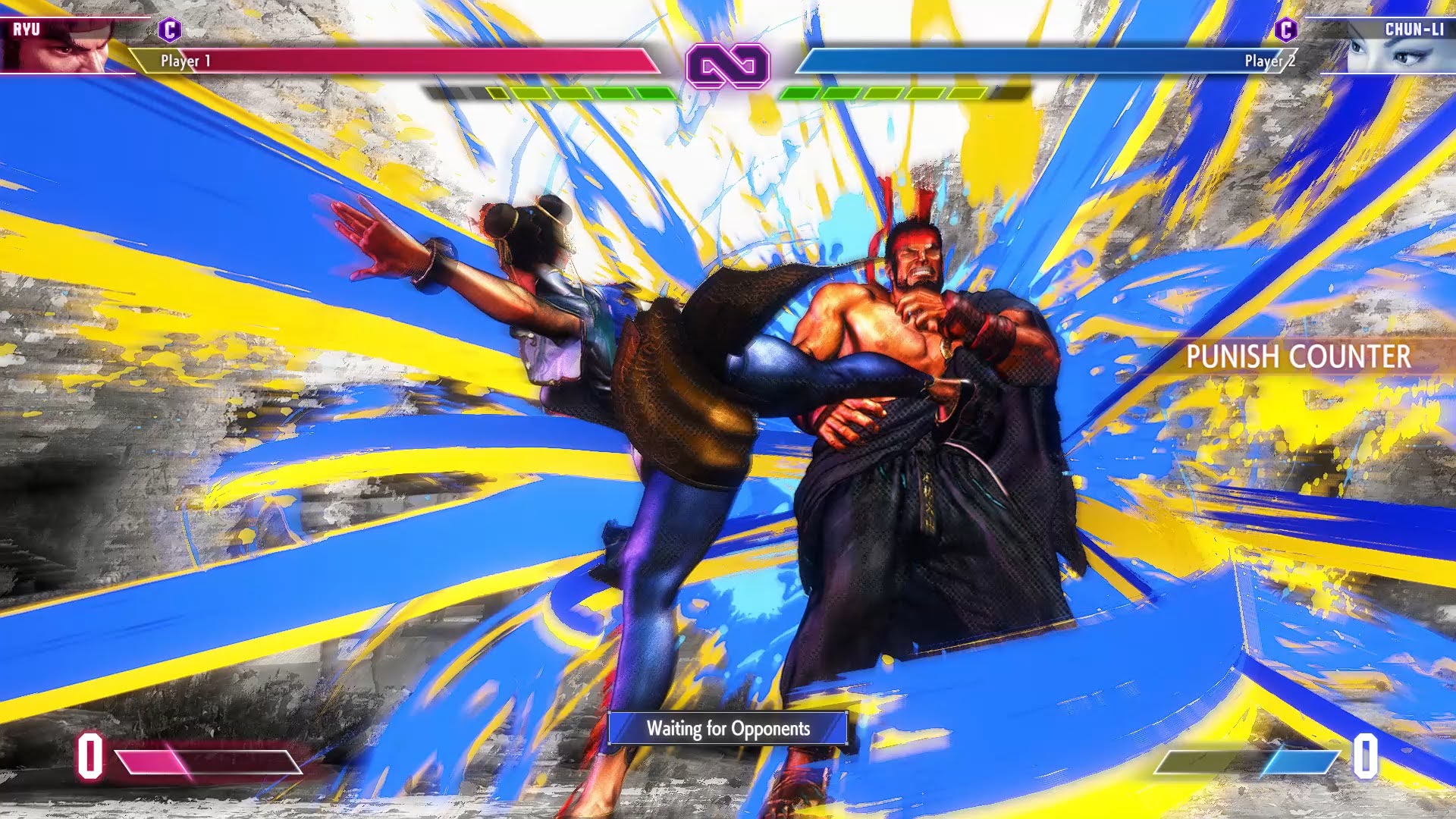
Last Thursday, I spent hours taking apart and putting back together a couple of arcade sticks. I switched out the Hori buttons on my newest stick with Sanwa buttons from an old one. All in preparation for this past weekend, when I got a chance to try out the Street Fighter 6 Beta. It was really more like a network test than anything. The only mode available was the Battle Hub, which is the new 3rd person online lobby system, and the survey I did afterwards was mostly about the network performance. There was a lot to see and do, though. There were 8 characters, 6 stages, training, minigames, the lobbies, and everything that comes along with them. I think the only thing I didn't do was the tournaments, which sound like a weekend event type of thing.
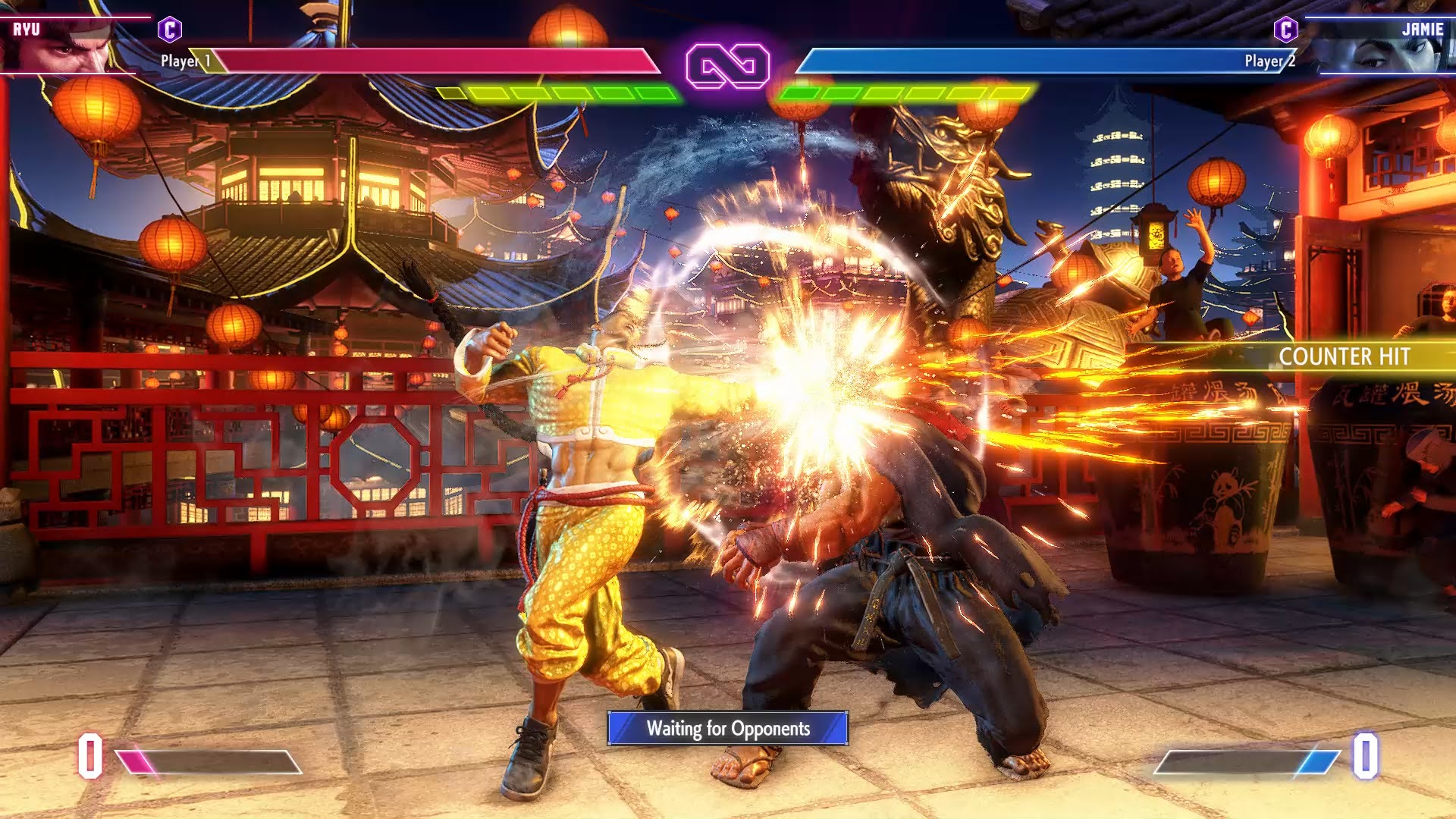
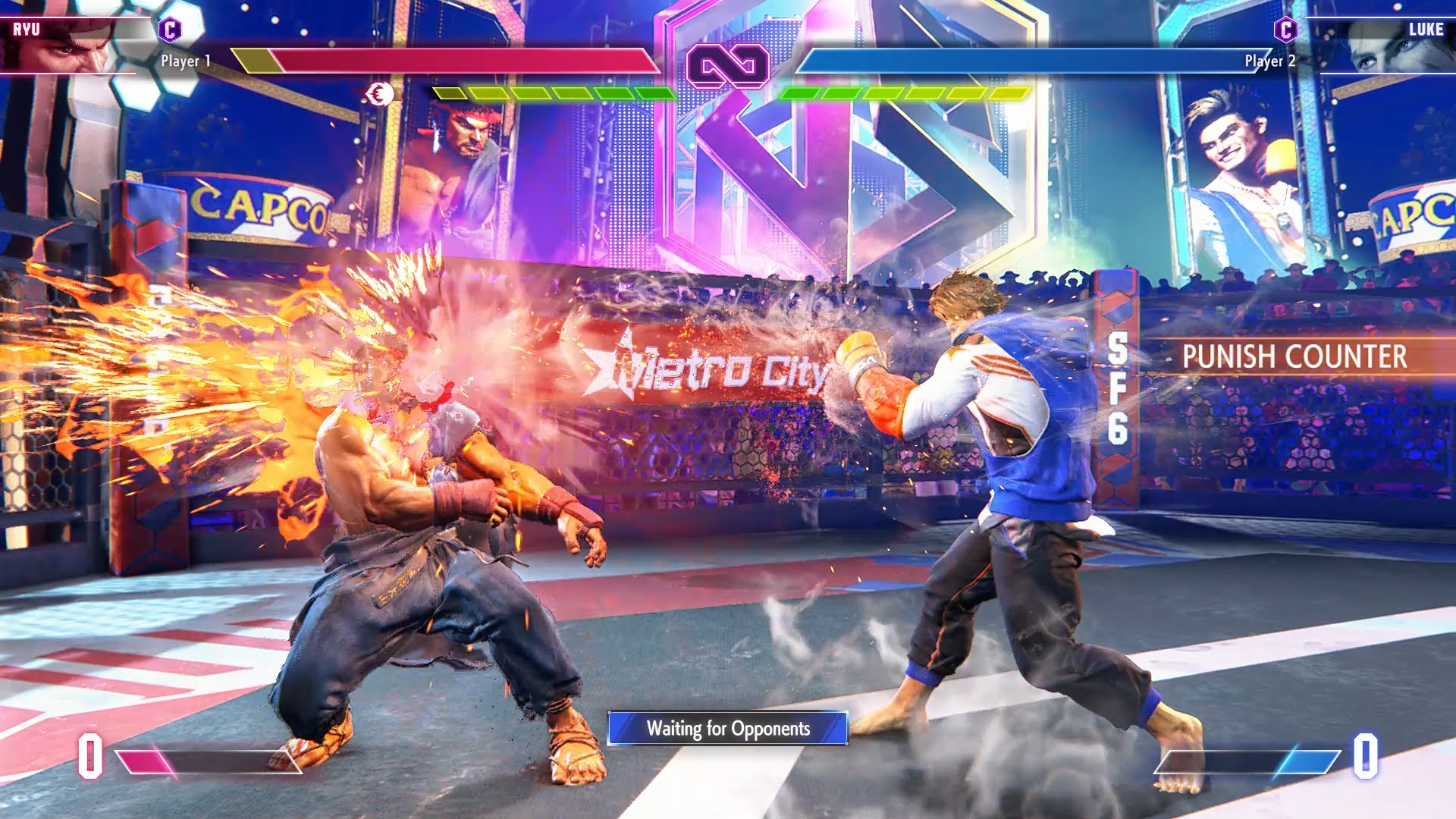
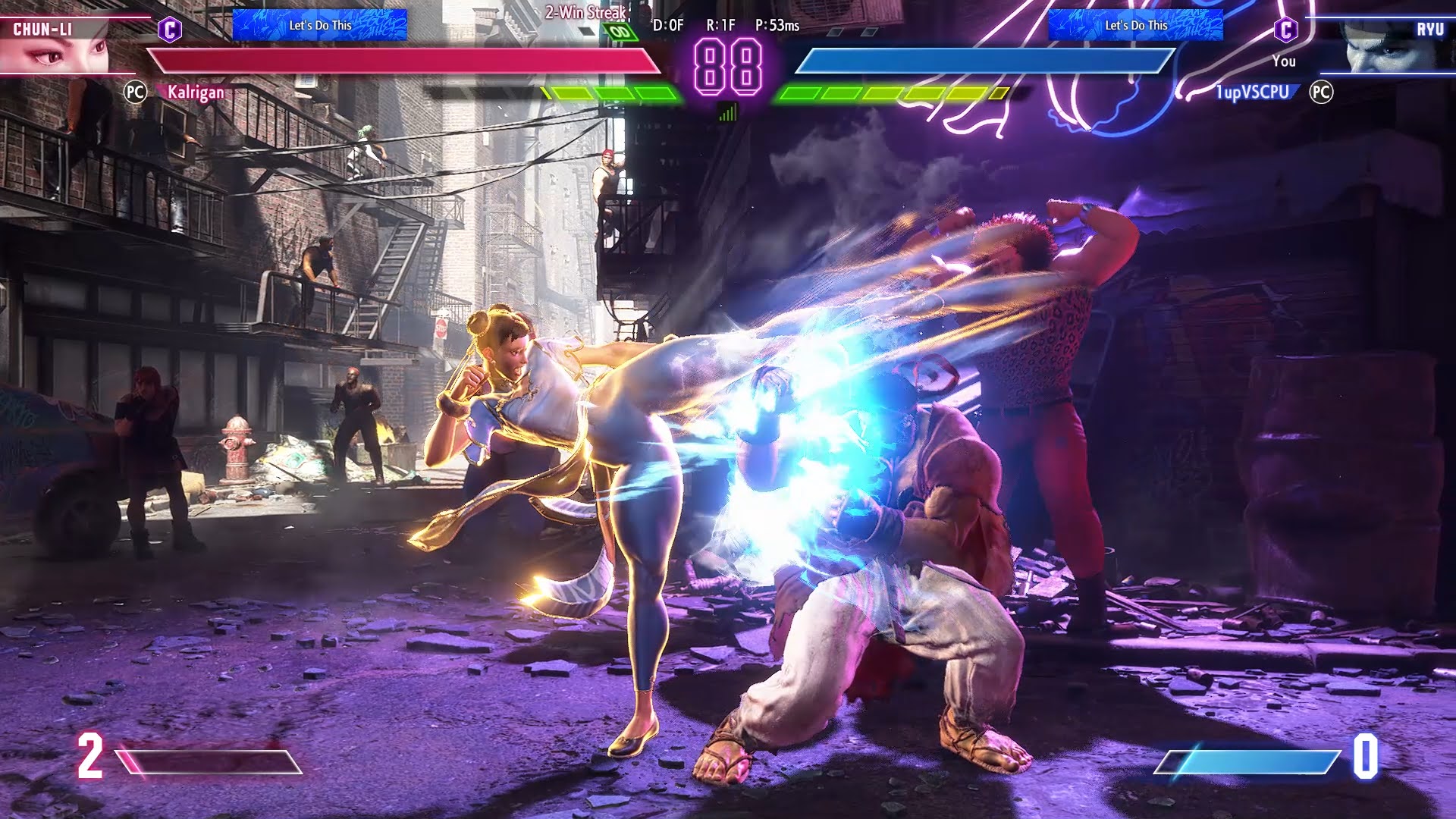
Of course, the most interesting thing to me is how the game actually plays. The first thing I noticed was that it's a bit slower than SF5. I'd say it feels closer to SF4, which seems to be a theme with SF6. I also noticed that there's a lot of hit stop going on. Maybe even more than in SF4. What I mean by hit stop is that the character animations stop for a brief moment when you connect with an attack. Super Smash Bros and Zelda games do this a lot, too. The actual fighting and controls of Street Fighter 6 feel really good. They feel like an evolution of SF5's. Move inputs are very simple, the game feels responsive, and the timing for basic combos is pretty forgiving and easy to understand thanks to the slower pace of the game. One clear example of how the game is easier to control is that characters with Rekka Ken style moves (like Karin and Fei Long in past games) only require a quarter circle input to start the attack and then you just tap on buttons for the following attacks. I guess Luke in SF5 really was a preview of how SF6 would play.
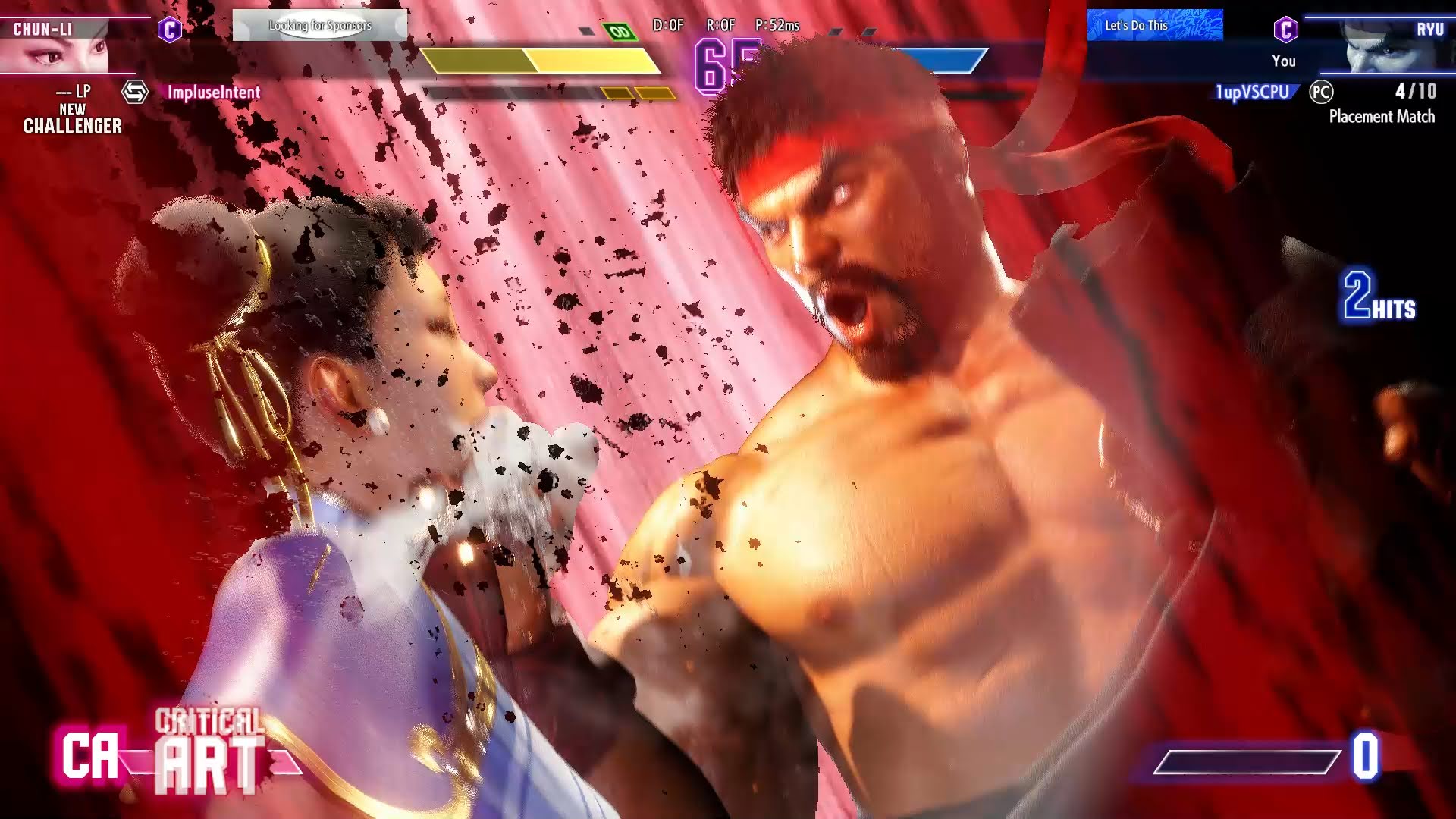
Street Fighter 6's new mechanic is the Drive system. You can use it for parrying, reversals, crumple attacks, and canceling out of animations with a dash. Sound familiar? Pressing MP and MK together activates the parry animation. It's really more like a focus attack than a SF3 parry since you don't have to perfectly time it. You just hold the buttons, start glowing blue, and become invulnerable to most attacks. You then get a faster counter attack after a successful parry. Activating the parry at all costs meter, but you also refill meter on successful parries. You can also dash out of the parry animation and attack. You can do this same Drive Dash after connecting with some attacks. For example, Ken can Drive Dash after connecting with neutral LP, MP, and HP. Like with SF4's FADC, canceling out of an animation with a Drive Dash gives you a chance to continue combos you otherwise would not be able to. A combo is not limited to one Drive Dash, but it costs 3/6 of your Drive meter to Drive Dash, so there is a limit.
Drive Impact looks and works almost exactly like your basic Focus Attack from SF4. You press HP and HK together and go into a nearly invulnerable animation that ends with an attack which will crumple your opponent if it connects. The big difference here is that this costs meter and it can be blocked. It will still knock back if blocked, though. You can also press HP and HK and the direction of your opponent after a successful block to do a Drive Reversal.
I forget if they have a new name for this, but what is commonly referred to as EX moves (Special moves that use meter when you do them with 2 buttons) also use Drive meter as their resource now and cost 2/6 of the meter. In older games, they just used the Super meter, which is only used for Supers in SF6.
I was never a fan of Focus Attacks, and while Drive Impact is an improvement on the idea, I'm still not a fan. There's too many "you can't hit me now" mechanics going on in this game. Maybe if it was just the Drive Parries, it would be fine. Drive Dashing looks cool and allows people to get creative with combos, but most people will never be able to do this stuff in a real match. I feel like the timing is just too strict, and the amount of inputs you have to remember and perfectly execute to do these long combos is too high for everyone besides the people who want to make SF6 the only game they play.
Honestly, I spent most of my time with the Beta in the training room, but I did also do a bunch of online matches. Some were fine and some were very laggy. Sometimes I felt like my moves didn't come out and sometimes it felt like my moves came out way too late and whiffed. It felt like the timing varied depending on the lag and it felt different from playing in the training room. This is why I'm not a fan of online fighting games no matter what kind of "netcode" they use.
There sure seems to be a lot of focus on the online aspect of the game, too. So much so that the game has a straight up 3rd person Phantasy Star Online style lobby, the Battle Hub. This is the first thing you see when you start the game. It's basically something between an arcade and a casino. There's other people running around with their goofball avatars, a shop where you can buy clothes for your goofball avatar, and a bunch of arcade machines all over. Most of the cabinets are Japanese style head to head cabinets with 1 screen and 1 set of controls on each side. You can go up to one of these, sit down, and go into training mode or spectate a match on another machine while you wait for a challenger. Other people can then go to the opposite side and challenge you. If there is already a match going on, people can either spectate or queue up to fight the winner. You can also just queue up for Casual and Ranked battles from the menu, so I think the cabinets will end up being more for when you want to fight specific people.
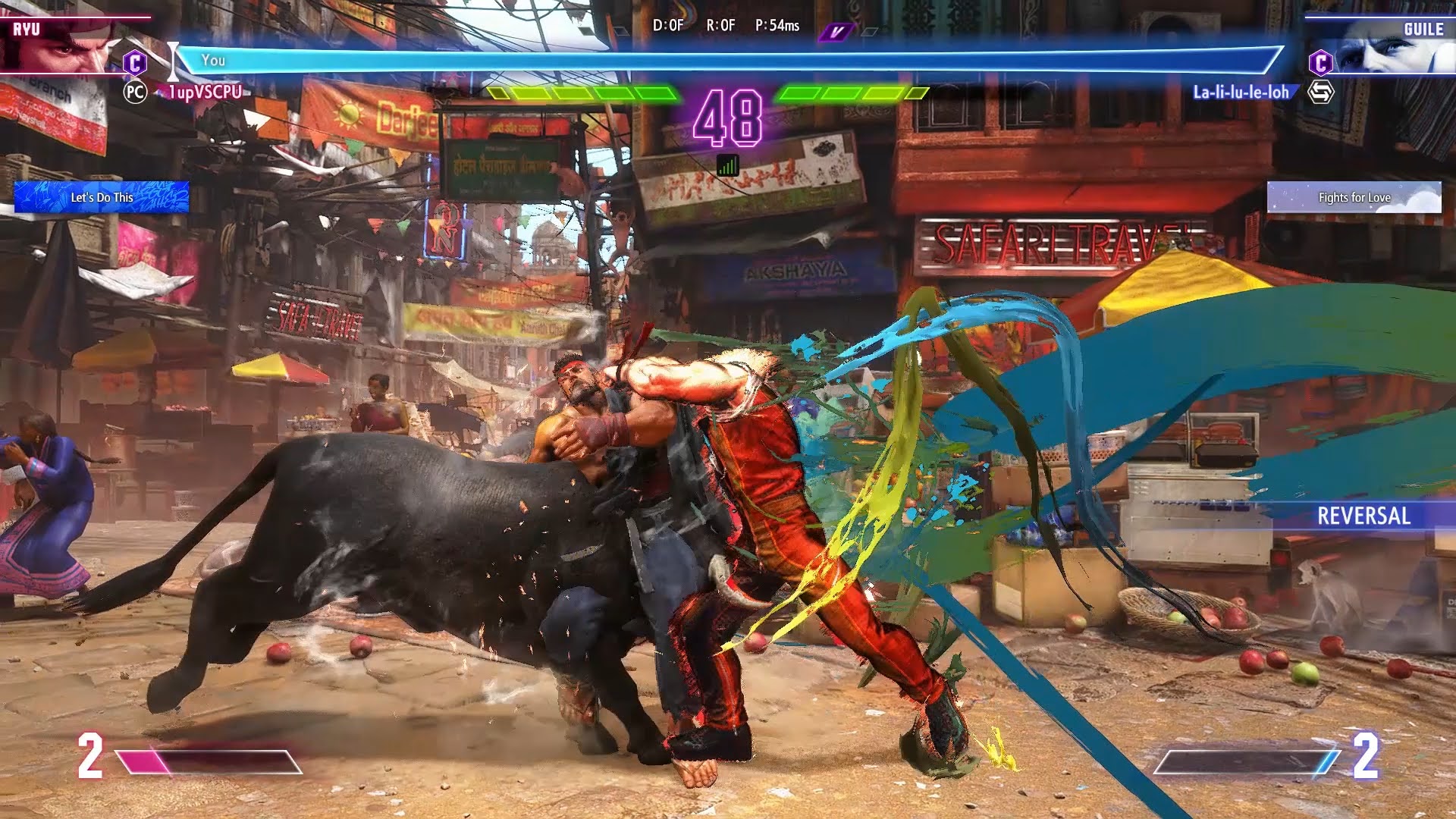
There are also minigame machines around the back of the room. These work just like the other machines, allowing you to go into the training room while waiting, except you play minigames against challengers. One of the minigames available gave you a list of objectives to do during a match with no life bars. For example, get 2 knockdowns, do 3 throws, 2 Drive Parries, and 2 anti-airs. The first person to complete all the objectives wins. I didn't really like that one. The other minigame was more like a reverse life bar tug of war. You fight to push a life bar towards your opponent's direction and whoever pushes the life bar all the way across first gets the KO. A bull will also regularly run out from one side of the screen and hit people for huge amounts of damage. This minigame took place on a stage not available in the regular VS modes, a streetside market with monkeys running around. I thought this one was a lot better than the other one.
There was also a section of the Battle Hub that had a classic Capcom arcade game on a bunch of cabinets. These seemed to be on a daily rotation. I saw Final Fight, Magic Sword, and Super Street Fighter II Turbo, the super hard version they put in SF30AC. I'm guessing these will all be games from Capcom Arcade Stadium 1 and 2. I actually played all the way through Final Fight here. All the games are on free play, but the emulator only has the bare minimum in terms of features. You can change the button mapping, and that's about it for the options. You can't even turn off the scanline filter or make a save state. It's cool that these games are even there, though.
Why are these old arcade games here? Well, you can just play them for fun on free play, but there is also some kind of leaderboard rankings system you can compete in if you play with 1 credit. You can also play them to complete in-game challenges. Just like SF5, SF6 has a bunch of weekly challenges you can do to earn the game's currency. I saw challenges that require you to do online battles, play the minigames, and play the classic arcade games. You can then use the currency you've earned to buy clothing items for your avatar. They sure have put in a lot of work into this stuff. I just wonder if the people who stick with this game for the long haul will care about it. All this avatar stuff seems like it's aimed at the people who play free to play service games, like Fortnite, but as far as I know, SF6 is not a free to play game.
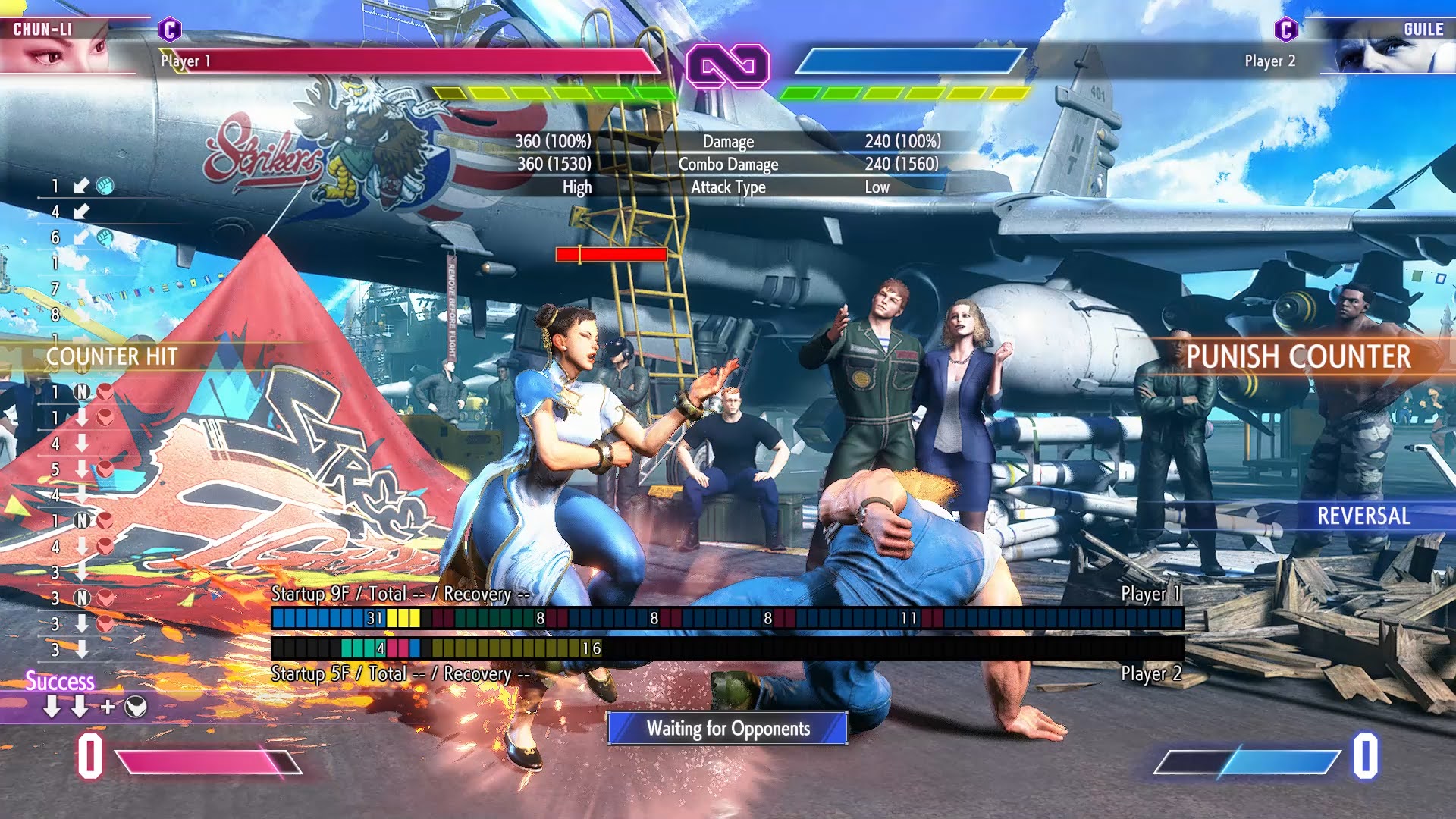
I really liked what I saw in the training room. There's options for just about anything you might want to practice. I used it to set up my own little makeshift VS CPU mode. There's a setting on there to just fight CPU controlled opponents with regular life bars and rounds. You can even set their difficulty. You can change stages and characters right from the training menu, too. I could have even done local 2 player VS there. There's toggles for displays for frame timing, cancel timing, inputs, and all kinds of stuff. I think the only thing missing is a hit box display option, like the one in Capcom Fighting Collection. This is the most useful training room I've ever seen.
I'm just going to guess that parts of the graphics are simply not done in this version because all the background NPCs looked very rough, with ugly models and basic textures. This was especially noticeable in the Final Fight themed stage where you can see Roxy and Andore in the background looking hideous. We know what those characters should look like and that ain't it. The backgrounds themselves look great, though. This game makes SF5 look ancient. All the backgrounds have amazing lighting and are incredibly detailed. I have to wonder if you'll be able to walk around them in the story mode because it looks like they've modeled a lot more than what they needed to. I have major issues with how some of the returning characters look, though. Why are all the guys so wide? Why are Guile's arms and shoulders so big? He looks like Popeye. And who is that woman cosplaying as Chun-Li?
I have to put my dislike for Drive Impact and the way some of the characters look aside and admit that I think this game is a lot of fun to play. SF6 is now on my wishlist. I'm confused about what they plan to do with all that Battle Hub stuff, though. Will there be a free to play version of SF6? I doubt it. Who is all this stuff for anyway? Is the person buying SF6 to play through arcade mode with all the characters going to care about avatar clothes? Are the people training for Evo going to care about them? I can't wait to see what the reaction to all this is when the full game comes out.
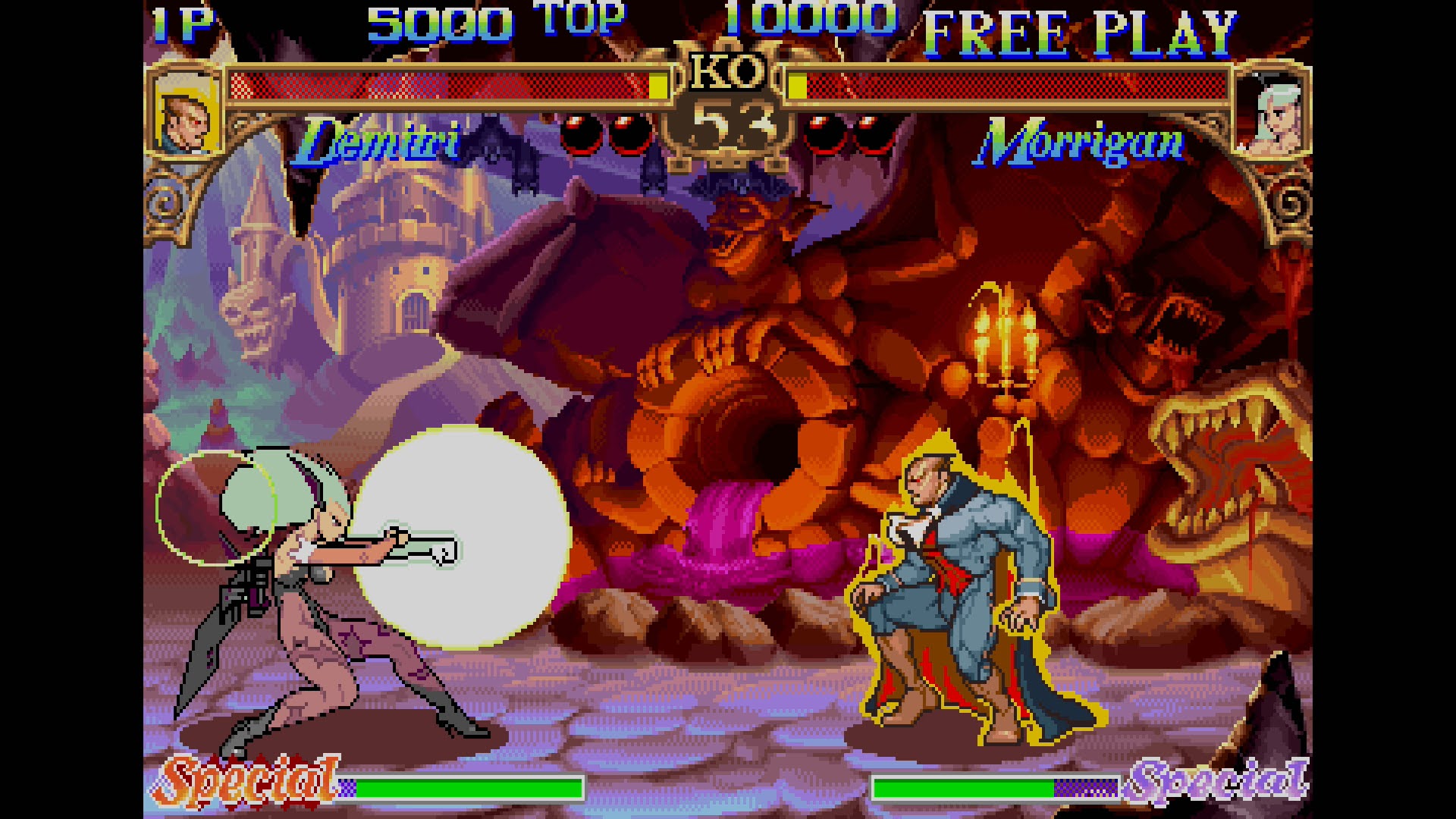
DarkStalkers' 25th anniversary came and went and we never got a DarkStalkers Anniversary Collection. I guess Capcom Fighting Collection will have to do. It's not exclusively a DarkStalkers collection, but it has all the games, along with some deep cuts from Capcom's fighting game library, like Cyber Bots and Pocket Fighter. Super Puzzle Fighter is in here, too. It's a nice collection of games, and after a recent update, I had to give this another look.
Even after the update, the biggest thing this collection has going against it is that it's missing a lot of features found in other Capcom collections. Capcom Fighting Collection is sorely missing a real VS mode, like the one found in Street Fighter 30th anniversary Collection. Capcom Fighting Collection only has the same 2P modes found in the original arcade games, so you can't pick a stage or switch characters in between matches if you win, like in SF30AC. The emulator in CFC is also lacking key features available in Capcom Arcade Stadium, which has manuals, rewind, save states for each individual game, and emulator level speed settings. The emulator in Capcom Fighting Collection only has the most basic features such as the arcade's settings, a move list, button configuration, display settings, and 1 save state for all the games. Yeah, you have to share 1 save state between 10 games. I know they’re fighting games and playing through those arcade modes doesn’t take long, but still, 1 save state for 10 games is ridiculous. It almost sounds like a bug.
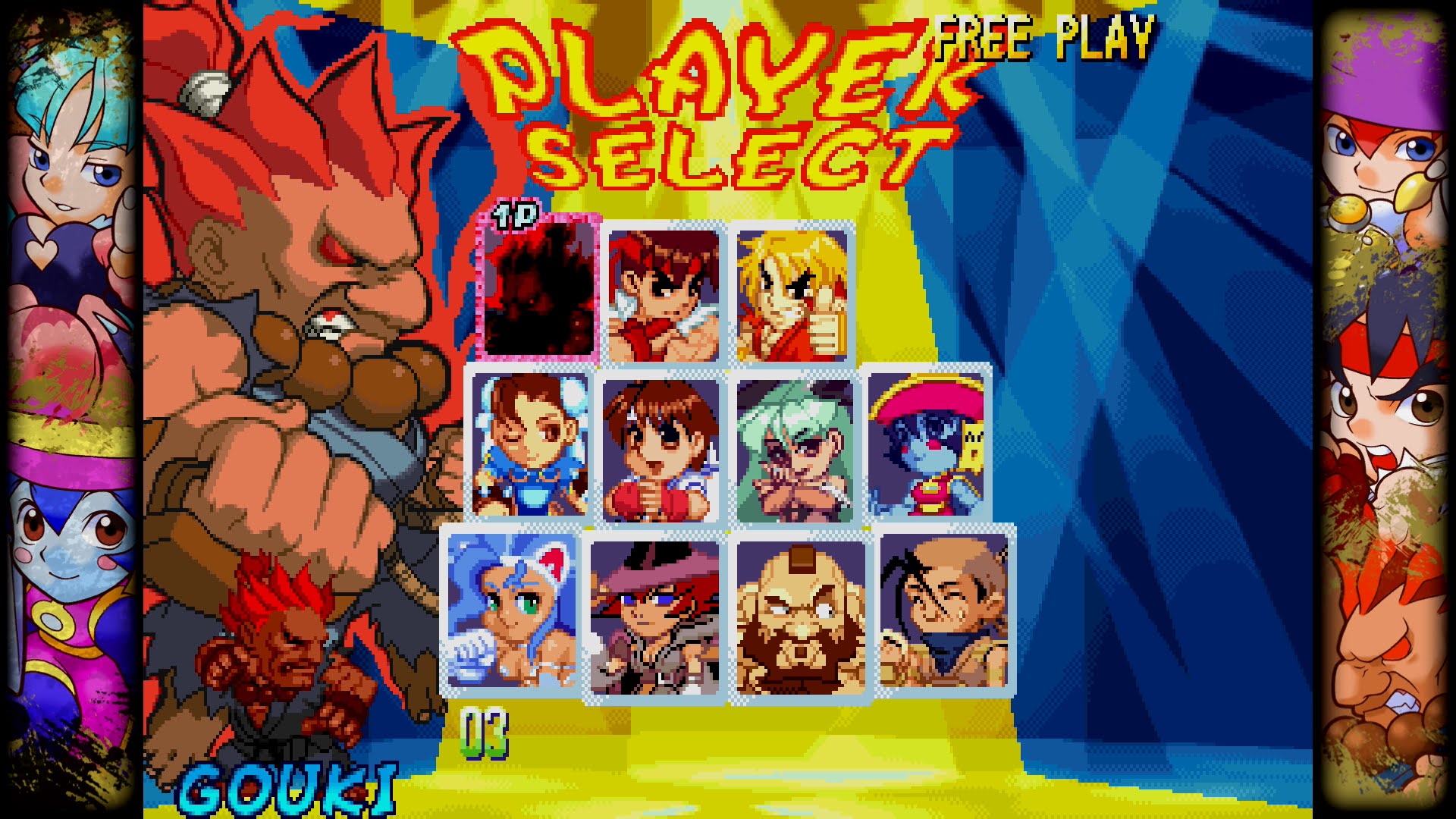
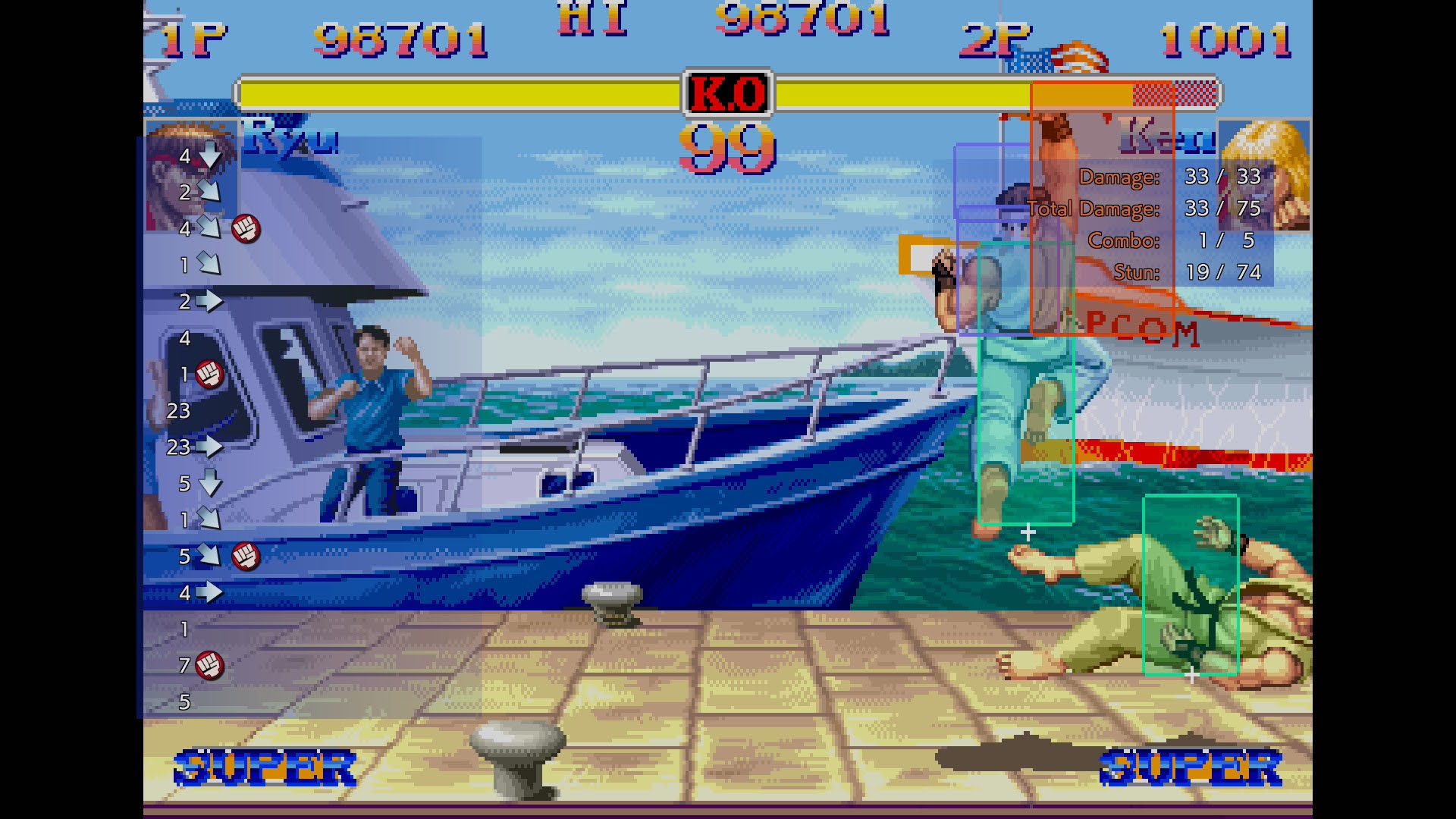
This collection does have some nice new features, though. CFC has all games on free play by default, so you don't have to mess with an insert coin button. It also lets you easily pick secret characters, like Akuma, without putting in a code on the character select screen. I totally missed this in my 1st review, but CFC also has training modes for all these games minus Puzzle Fighter. SF30AC only has training modes for 4 of its 12 games. The recent update also added an option to display hitboxes, which is great if you really want to learn how to play these games. I originally missed the training mode because you have to press the + button on the game selection screen to get to it, and the only thing that tells you this is some small scrolling text at the bottom of the screen.
Online play with rollback netcode is supposed to be the big special feature here, but you're going to have to set up a fighting game night with your Discord friends to enjoy it because there's nobody playing it. It has a cool implementation, though. It allows you to pick the games you want to play from a list and then lets you play whichever game you want while waiting for a match. All these games are playable online, too, unlike in SF30AC. I don't know if people just aren't playing this on Switch, but I wouldn't buy this with the intention of playing randoms online.
The display options are pretty good. It has 4:3 and pixel perfect aspect ratios in 4x its original resolution and stretched to fit the full screen vertically. It also has a stretched 16:9 mode for people with no respect for beautiful pixel art. Each game has 3 unique border wallpapers, which is better than only having the same 3 for every game, like other collections do, but seems low considering how much artwork of these games there is. You also get 8 different scanline filters with varying patterns and brightness levels. I don't usually use scanlines, but this seems like a good variety of styles.
The Museum is full of music and artwork from all the games. There's a lot of arcade cabinet art, flyers, and concept art here, which is really cool. It's not quite the art book's worth that's in Street Fighter 30th Anniversary Collection, and it doesn't have all the history of the series stuff, but there's a lot of art from all these games here. The recent update also added an art shuffle mode which shuffles art from all the games like a screensaver.
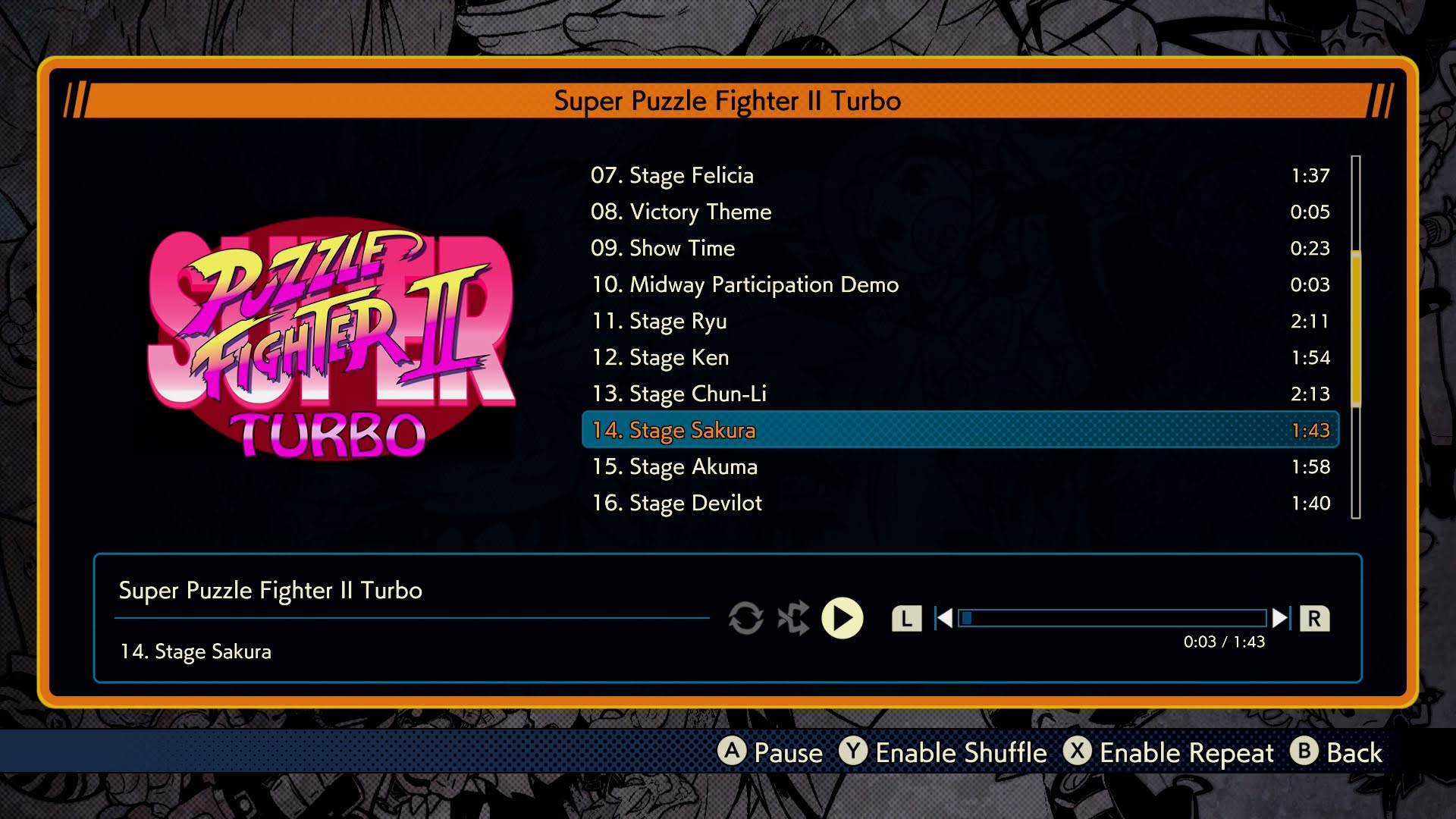
The music player has repeat, shuffle, auto play, and the update added a mode that shuffles music from all the games, so it's a decent music player, but it doesn't let you make playlists or look at the artwork while you listen, which would've been cool. The music selection looks pretty nice. It has all the music recorded for the Capcom Fighting Collection, and it looks like it has all the music that's actually in the games. I noticed it's missing Sakura's vocal theme, though. "I Want You To Know" was a track you could play if you put the Super Puzzle Fighter II PS1 disc in a CD player. It was also unlockable in the GBA version. I don't think it was in the arcade game, but it should have been in here!
There are some great games in this collection; though, so let’s go over them!
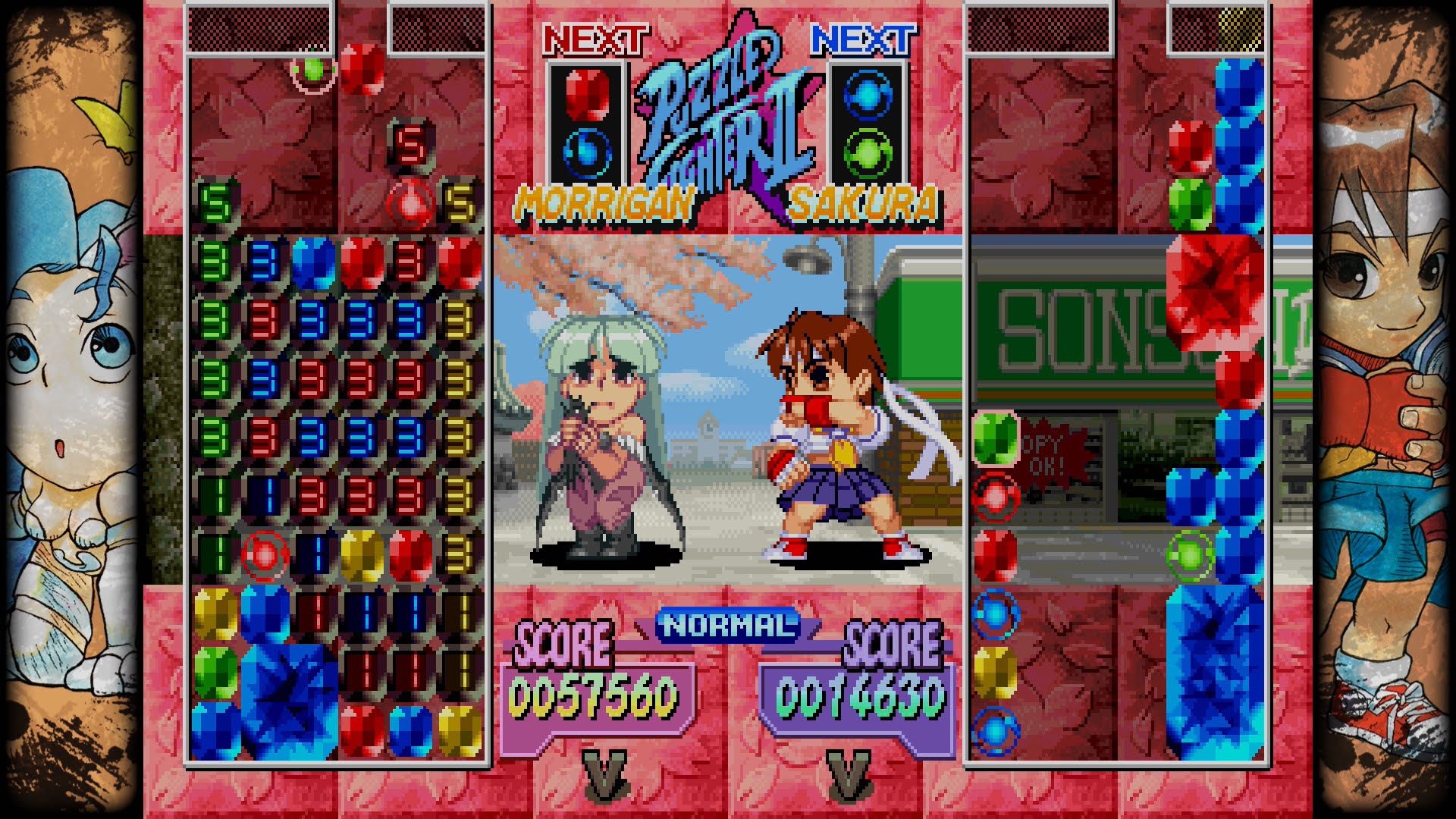
Super Puzzle Fighter II Turbo (1996) - The only game in this collection that’s not actually a fighting game. SPFIIT is Capcom’s answer to Tetris and Puyo Puyo. It basically plays like Puyo Puyo with special blocks that clear connected colors instead of them clearing once you connect 4. It features chibi versions of characters from Street Fighter and DarkStalkers and is a parody of Capcom’s own fighting games right down to its name. We don’t get a lot of parody games these days, but it used to be a thing companies, like Konami and Capcom, did.
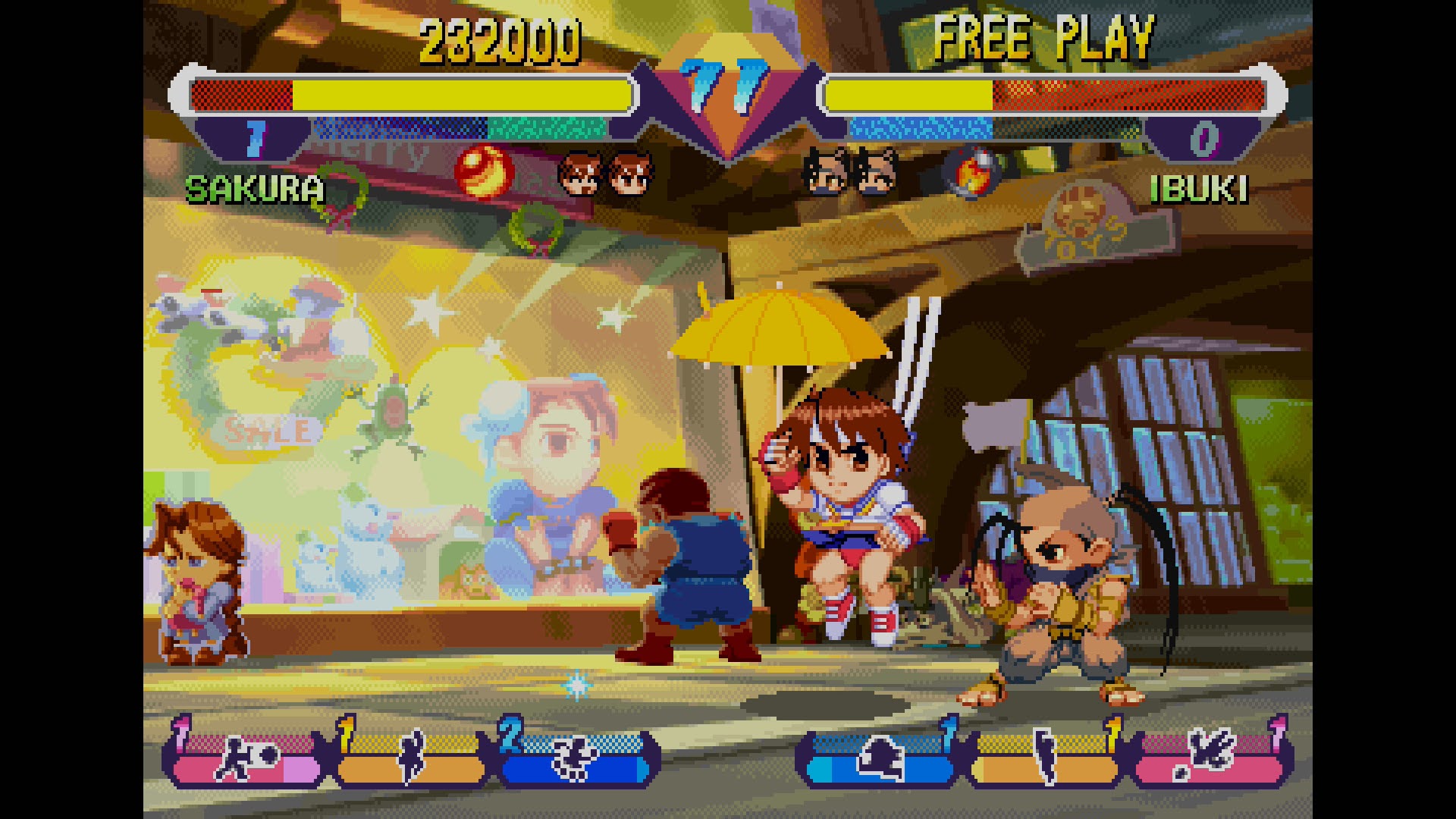
Pocket Fighter (1997) - Of course, when people saw Super Puzzle Fighter's cute characters, they had to have them in a fighting game! This is a 3 button game, with only punch, kick, and special, but it has real fighting game inputs. It also has stuff like dashing, supers, and all sorts of things that would be familiar to people who played Capcom's fighting games from this era. This game is even sillier than SPFIIT and is packed with Capcom references and cameos.
Cyberbots (1995) - A very Gundam-esque fighting game in which you play as mechs. It has a bunch of characters, but they all pilot the same mechs, so they all kind of play the same. It’s very floaty and clunky compared to Street Fighter and DarkStalkers, but maybe people who are into mechs like that? The main character, Jin, is much better known for his appearances in Marvel VS Capcom games. Jin might or might not be Ryu's descendant, and this might or might not be the future of the Street Fighter universe, so that's interesting.
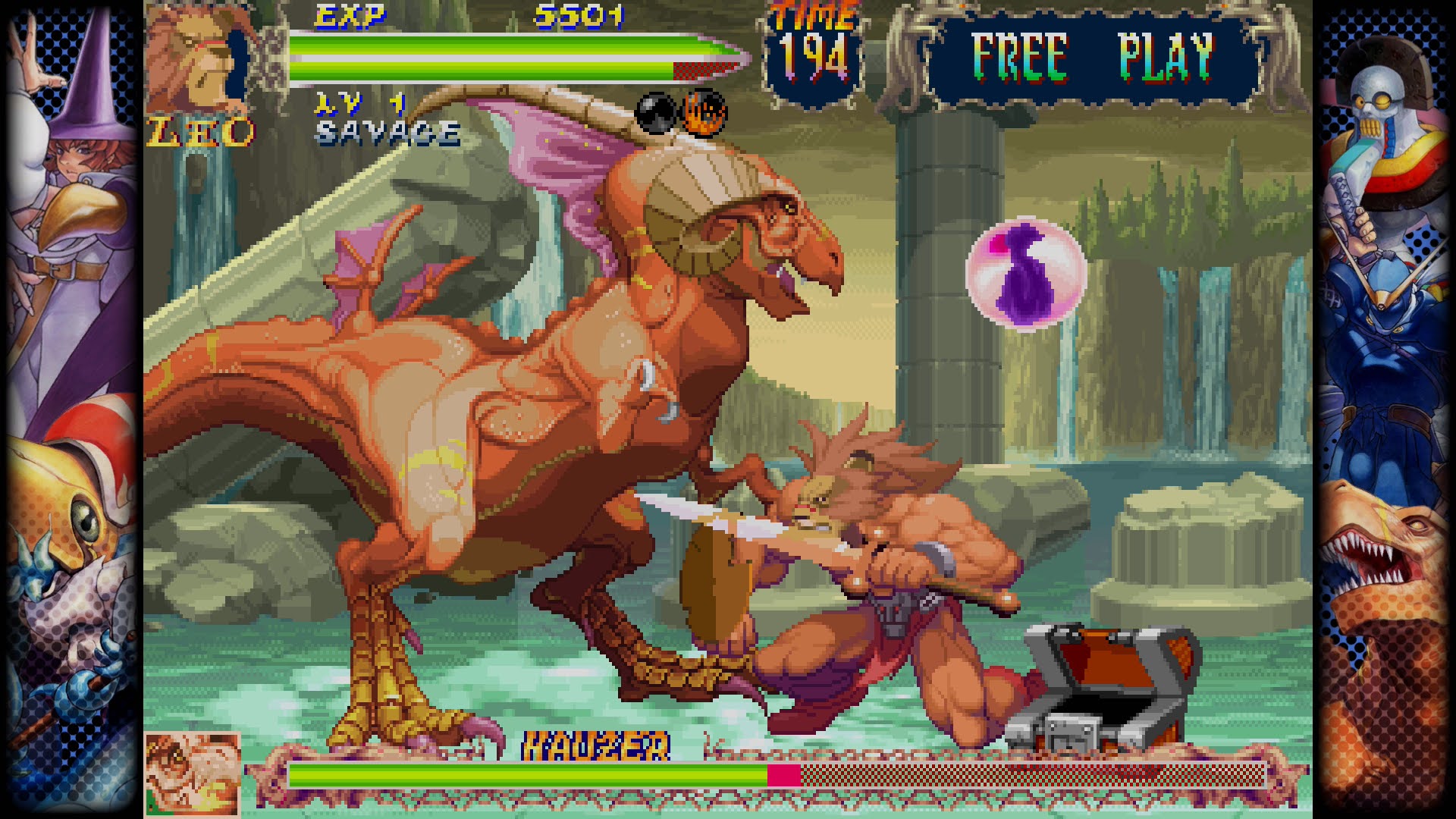
Red Earth (1996) - This is the game Tessa comes from! It's the only game Capcom made for the CPS3 that wasn't called Street Fighter III. It's very experimental and kind of hard to even call a fighting game. It controls like a fighting game, but it's more like a boss rush game. Usually more like the Galactus in MVC3 kind of boss rather than the M. Bison kind of boss. It has experience, leveling, and uses passwords to save your progress. The weirdest thing is how bosses’ health carries over after you continue, as if this was a beat ‘em up or something. Even though this game has a bunch of characters you fight in single player, it only has 4 playable characters, so it's not much of a multiplayer game.
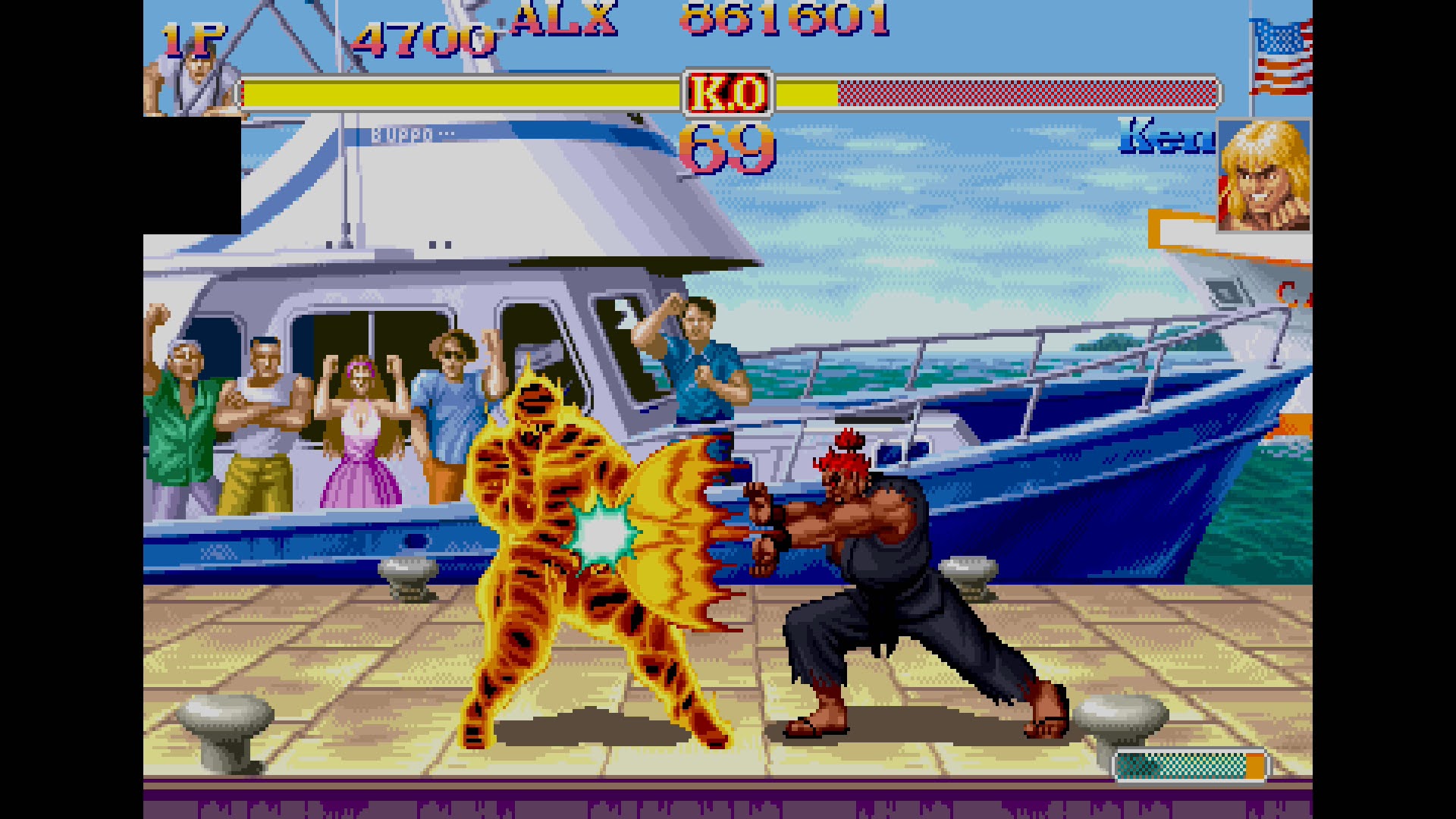
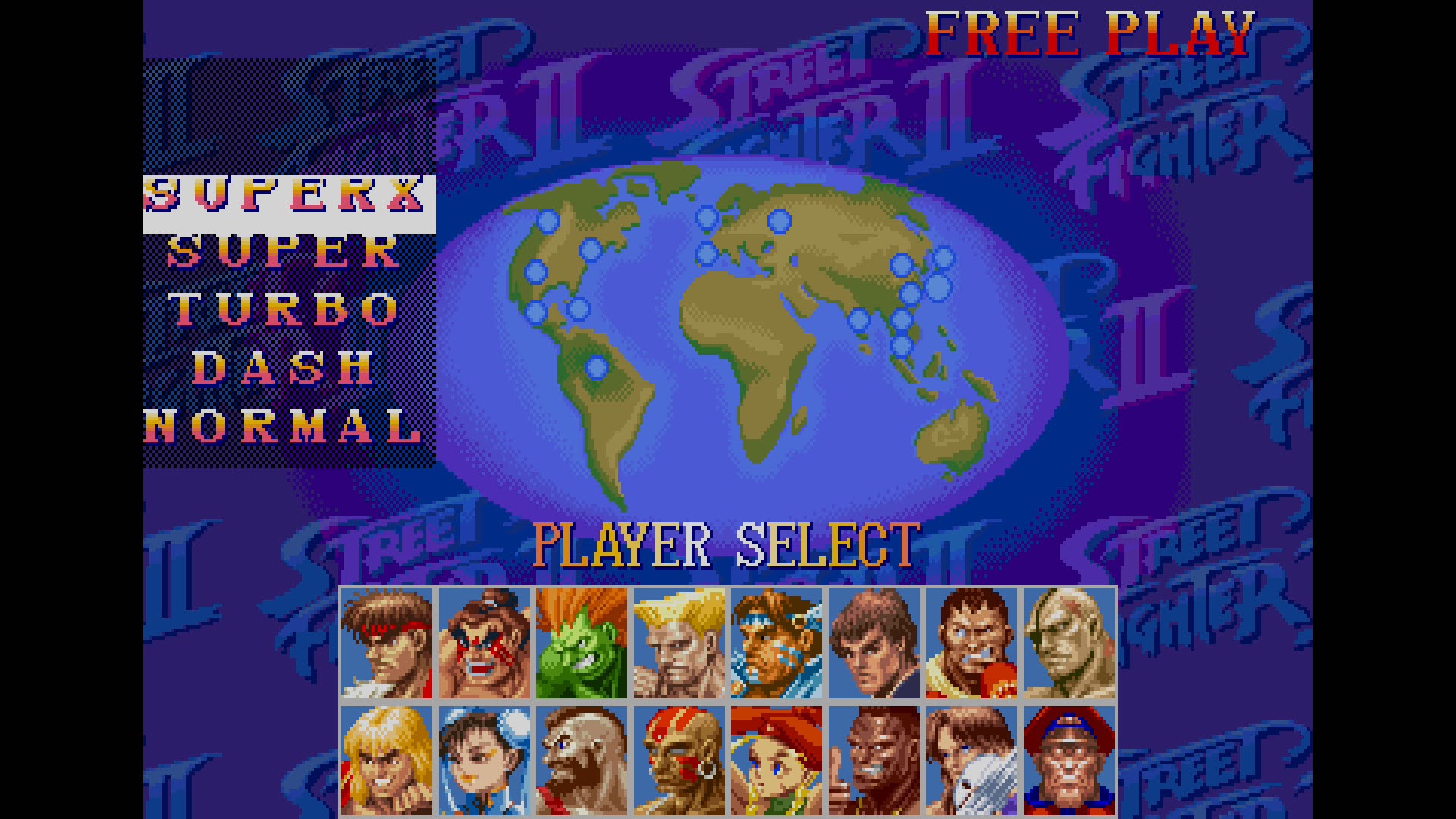
Hyper Street Fighter II The Anniversary Edition (2003) - This is the game Capcom released for Street Fighter's 15th anniversary. It's Super Turbo, but with the ability to choose any version of any character from any previous game. You can play as Champion Edition M. Bison, for example. This is the game they played the last time SFII was played on the main stage at Evo.
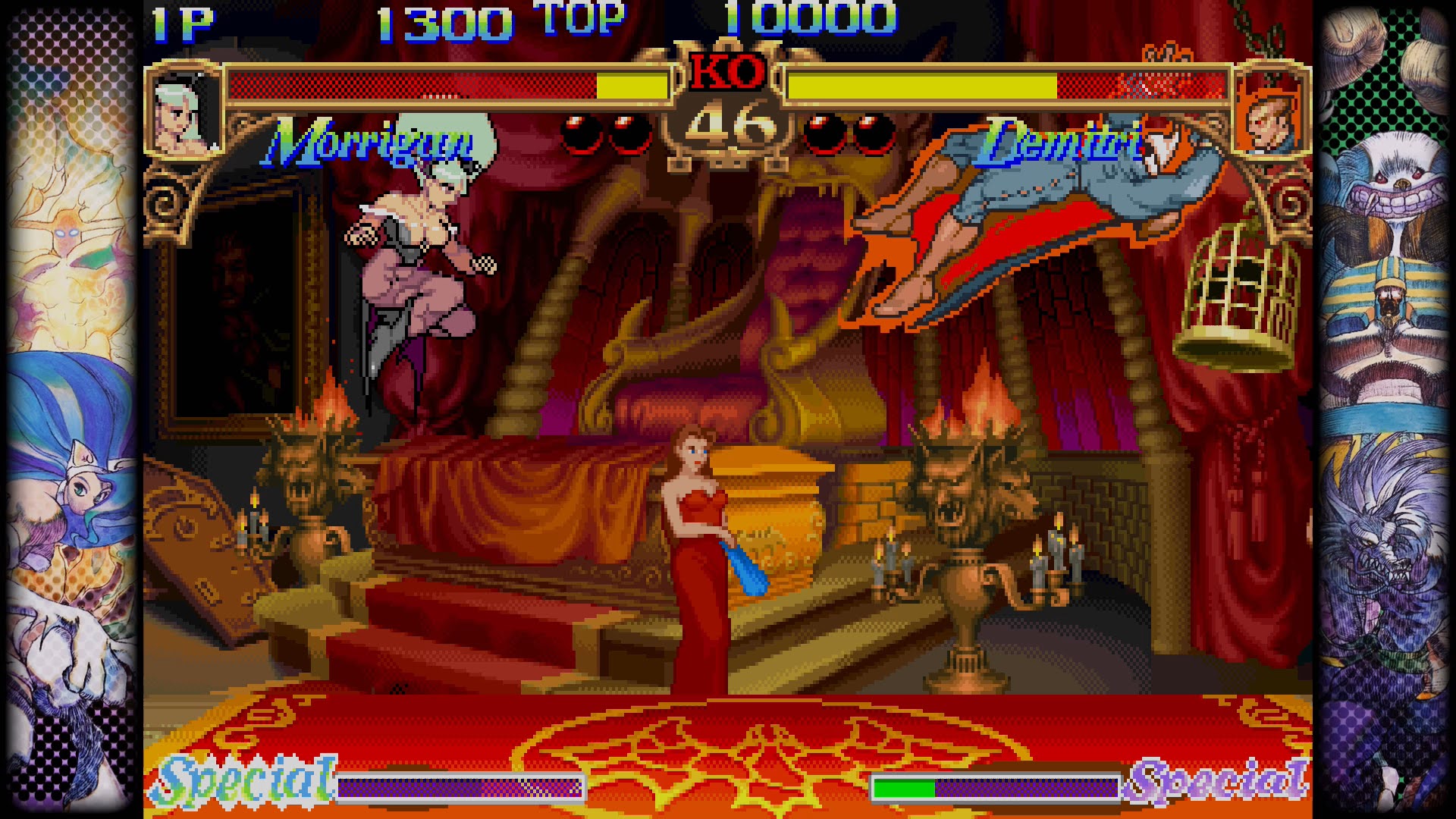
DarkStalkers (1994) - This game’s mythical monster theme and awesome artstyle made it stand out from every other fighting game at the time. It didn't play radically different from Street Fighter when it first came out, but this series is where a lot of mechanics we see in Street Fighter and Capcom’s Marvel games come from.
Vampire Hunter (1995) - This was called Night Warriors in English. It added new characters, stages, and introduced real EX moves, tech rolls, and pursuit attacks. It was a sequel to DarkStalkers, but all these are really more like Champion Edition style revisions.
Vampire Savior (1997) - AKA DarkStalkers 3. It added new characters and stages and introduced advancing guard and super jumps to the series. It also made it so that the winner's lifebar doesn't reset after KOs, essentially getting rid of rounds.
Vampire Savior 2 (1997) - A revision of Vampire Savior which rebalanced the game, switched out some characters and stages with ones from Vampire Hunter, and added Lilith.
Vampire Hunter 2 (1997) - This game came out at the same time as VS2. It’s more like VS2 with Vampire Hunter characters and the characters that weren’t in VS2 than it is a revision of Vampire Hunter. It plays just like VS2 and has Vampire Savior’s health system with no health resets after KOs.
This is a great bunch of games. If you care about Capcom's history, their art, and all that jazz, then yes, this is a must buy. I just don’t think it's going to be worth it for everyone. I mean, the art and music are nice, but I bet most people don't look at that stuff twice. And if you're not into the competitive aspect of these old games, you probably don't care about the training modes. The online is deserted, too, and that was its biggest selling feature. Six out of ten of these games are already on Capcom Arcade Stadium 2, and the rest will probably be there eventually. You could get these games there without online, but with a better emulator that lets you make a save state without overwriting another game's save. You could also just get the games you want for $4 each in CAS2 instead of spending $40 for this. I guess if you have friends who will play these games online with you, then CFC would be the way to go, but if you're only sort of interested in these old games, just check them out in CAS2.